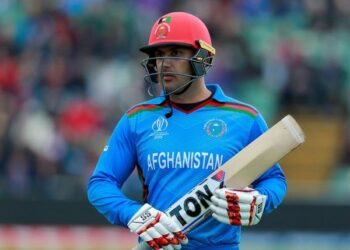


The player rankings of ICC (International Cricket Council) are a popular ranking system for cricketers to gauge their performance. MRF Tyres is currently the sponsor, having inked a four-year arrangement with the International Cricket Council that will run through 2020.
In 1987, Ted Dexter proposed that the rankings be created. The goal was to provide a more accurate picture of a player’s present rank in ICC events than can be obtained just by comparing their average performances. Averages across all matches are based on a player’s entire tenure and do not account for conditions of the match or the performance of opponents on the given day. Ratings are inclined towards current form and employ statistical methods to consider the conditions of the match and opponent quality. In contrast, career averages are based on a player’s entire career and do not account for match conditions or the level of the opposition.
Originally ranking systems started exclusive for Test cricket, but in 1998, rankings for One Day International were developed. Rankings in both formats have now been calculated back to the beginning of the respective game types. The best ten ODI, T20, and Test batters, bowlers, and all-rounders are listed based on their ratings
Player rankings are calculated using a weighted average of a player’s entire career performance, with current games taking precedence (so the total impact of an excellent or poor performance subside over time). Based on a series of pre-determined criteria, each match’s performance is rated out of 1000, and these statistics are aggregated. It means that a player’s maximum rating overall is 1000, with a 900 being considered superb. Bowling and batting rankings and an all-rounder rating calculated by multiplying a player’s bowling and batting ratings together and dividing by 1000 are entirely independent.
Included are runs scored, opponent bowler rating, match result, and overall match data grade batting performance. The number of wickets a bowler takes, the number of runs he concedes, and the match’s outcome determine a bowler’s point total, with bonus points awarded for dismissing highly rated batters. A damping factor is added to a player’s rating at the beginning of their career, so they do not obtain a complete ranking for their efforts until they have played roughly 20 Tests.
An all-rounder has to deliver both with a bat and bowl effectively. All-rounders are still classified as batting all-rounders or bowling all-rounders based on their primary role. Let’s look at the ICC ranking of the top 10 all-rounders in T20 internationals.
| Ranking | Player | Country |
| 1 | Sophie Devine | New Zealand |
| 2 | Natalie Sciver | England |
| 3 | Kathryn Bryce | Scotland |
| 4 | Deepti Sharma | India |
| 5 | Hayley Matthews | West Indies |
| 6 | Stafanie Taylor | West Indies |
| 7 | Ellyse Perry | Australia |
| 8 | Chamari Athapaththu | Sri Lanka |
| 9 | Salma Khatun | Bangladesh |
| 10 | Ashleigh Gardner | Australia |
| Ranking | Player | Country |
| 1 | Mohammad Nabi | Afghanistan |
| 2 | Shakib Al Hasan | Bangladesh |
| 3 | Liam Livingstone | England |
| 4 | Glenn Maxwell | Australia |
| 5 | Wanindu Hasaranga | Sri Lanka |
| 6 | Zeeshan Maqsood | Oman |
| 7 | J.J. Smit | Namibia |
| 8 | Aiden Markram | South Africa |
| 9 | Moeen Ali | England |
| 10 | Mitchell Marsh | Australia |
Reference Links: